Nuclear Waste Services’ (NWS) process under Government Policy to find a suitable site and willing community for a Geological Disposal Facility (GDF) is different in many ways to either of the previous approaches seen in Cumbria.
GDFs – underground facilities designed to safely and securely dispose of radioactive waste deep underground – are internationally recognised by governments, technical experts and scientists as the best solution for the safe, permanent disposal of our most hazardous radioactive waste.
Countries such as Finland, Sweden, France, Switzerland, and Canada are already making progress in delivering their own facilities.
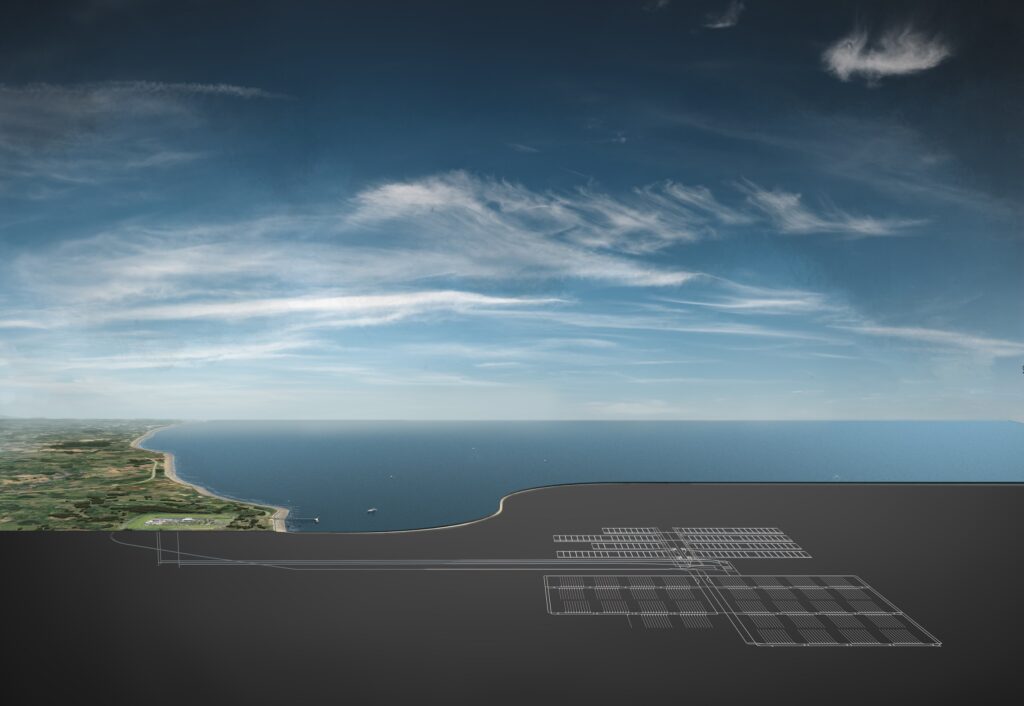
A GDF will comprise three main elements – the right Sub-surface geological environment deep underground for the disposal area, a Surface location and the ability to connect the two with Accessways.
NWS also continues to review appropriate solutions including learning from and engaging with overseas programmes, which could have the potential to improve the long-term management of some of the UK’s radioactive waste.
How is the current NWS GDF programme different to previous processes in Cumbria which did not proceed further?
The deep geology to be considered to host a GDF, in Cumbria (known as the Sub-surface) lies between approx 8-20km off the coast, in a new area which has not been previously considered.
The GDF process which NWS must follow in England is set out in Appendix 1 of the Government’s Managing Radioactive Substances and Nuclear Decommissioning: UK Policy Framework (The Policy). In line with this Policy, a GDF will only be built where there’s a suitable site and a willing community. The Policy is unique and differs from previous approaches.
What is the current process and what stage is it at?
The Policy does not identify preferred sites or locations. As part of its siting process, NWS must undertake the necessary technical analysis to assess the suitability of an area, while working in the community to build understanding for a GDF.
There are two Community Partnerships currently involved in the process – Mid Copeland and South Copeland – which have potentially suitable geology for siting the underground elements of a GDF (the Sub-surface geology is the same for both communities). As part of the GDF siting process, NWS identified Areas of Focus within Mid and South Copeland which have been guiding more detailed work for assessing the potential of each area to safely host a GDF.
Further information for Mid Copeland here and South Copeland here.
See here for further information on Site Evaluation and Site Characterisation.
What previous processes have taken place in Cumbria?
NIREX
Following initial work led by the UK Atomic Energy Authority (UKAEA), the UK nuclear industry created and funded an implementation body – the Nuclear Industry Radioactive Waste Executive (NIREX) – to take forward work to find solutions for UK radioactive waste, funded by the UK nuclear industry.
What was the NIREX process?
In 1987 a public consultation process called The Way Forward started by considering which areas in Great Britain could potentially be used to site a GDF and invited public and stakeholder comments. NIREX identified two potential sites – Sellafield and Dounreay.
Planning permission was obtained to carry out exploratory drilling in both locations. NIREX concluded that the Sellafield area had advantages over Dounreay and submitted a planning application to construct an underground Rock Characterisation Facility (RCF) at Longlands Farm, near Sellafield.
The RCF application was called in by the Secretary of State and a Public Inquiry was held in 1995/6. In their report, the Inspector recommended that the planning application be refused. In March 1997 the Secretary of State completed his consideration of the Inspector’s report. and decided that Nirex should not be allowed to construct the RCF near Sellafield.
As a result, NIREX did not get as far as obtaining the necessary permissions to carry out further investigative work to further assess the suitability of the geology.
Managing Radioactive Waste Safely (MRWS)
The Government had a rethink of policy under the Managing Radioactive Waste Safely (MRWS) process. This led to the creation of the Committee on Radioactive Waste Management (CoRWM) in 2003 as an independent advisory body, charged with a review of options for managing radioactive waste.
In 2006 CoRWM published its 15 recommendations following which the Government published a response, re-confirming that geological disposal, preceded by safe and secure interim storage, together with ongoing research and development should be how the UK’s higher activity radioactive waste was managed in the long-term.
In 2008 the Government launched a new search for a site to host a GDF.
What was the MRWS process?
Communities were invited to express an interest in opening discussions with Government (without commitment) on the possibility of hosting a GDF.
Copeland Borough Council and Allerdale Borough Council responded, followed by Cumbria County Council. This resulted in the formation of the West Cumbria Managing Radioactive Waste Safely Partnership, which met for more than three years.
The search area considered was all of Allerdale and all of Copeland, plus up to 5km off the West Cumbrian coast.
A desk-based study by the British Geological Survey (BGS) about the potential suitability of West Cumbria’s geology, ruled out large areas which the MRWS process was considering. However, no areas within Search Areas in the current NWS process were ruled out.
The process reached a stage which required all the councils to take a ‘Decision to Participate’ about whether to move forward into the siting process. Allerdale and Copeland Borough Councils voted to move forward, however Cumbria County Council voted against, and the process stopped in West Cumbria.
All work done to this point by MRWS, in relation to the suitability of the local geology, was desk-based, further investigative work had not been carried out.